
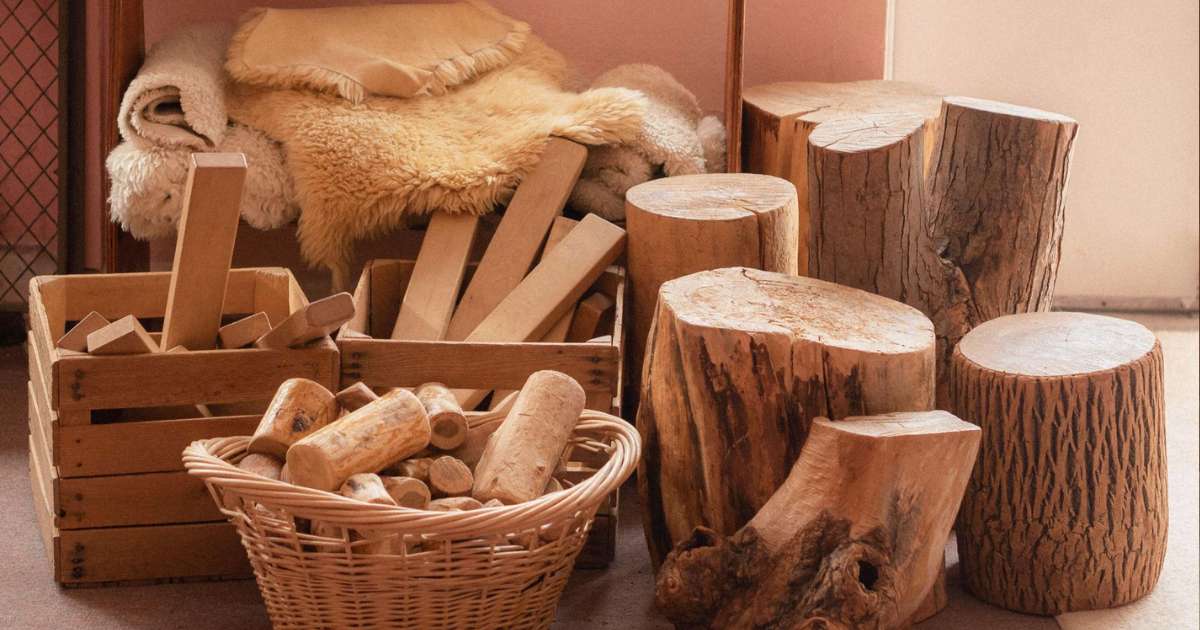
In many modern homes and classrooms, toys are designed to capture attention quickly. They light up, make sounds, speak phrases, or offer a single clear function. While these toys can certainly entertain children for a time, Waldorf education takes a very different approach. Instead of highly detailed or electronic toys, the early childhood environment is filled with simple, open-ended materials — wooden blocks, play silks, baskets, shells, pinecones, stones, and other natural objects.
At first glance, these materials may appear modest or even unfinished. Yet this simplicity is very intentional. In Waldorf education, the belief is that when toys are simple, the child is invited to bring something of themselves into the play. Instead of the toy providing the story, the child becomes the storyteller.
Young children live deeply in the world of imagination. Through imaginative play they explore experiences, express feelings, and begin to make sense of the world around them. When a toy is highly detailed or fixed in its purpose, it often limits how a child can engage with it. A toy that already represents a very specific character or scenario leaves little room for interpretation.
Simple materials, however, allow endless possibilities. A piece of silk might become a river flowing across the floor, a cape worn by a brave adventurer, a blanket for a sleeping doll, or the roof of a carefully built house. A set of wooden blocks might be transformed into towers, bridges, animal homes, shops, or vehicles.
Because the materials do not dictate the story, the child is free to invent and reinvent their play again and again. What appears to adults as repetitive play is often the child deepening their ideas and exploring new possibilities within familiar materials.
This process strengthens imagination, creativity, and flexible thinking — qualities that remain valuable throughout life.
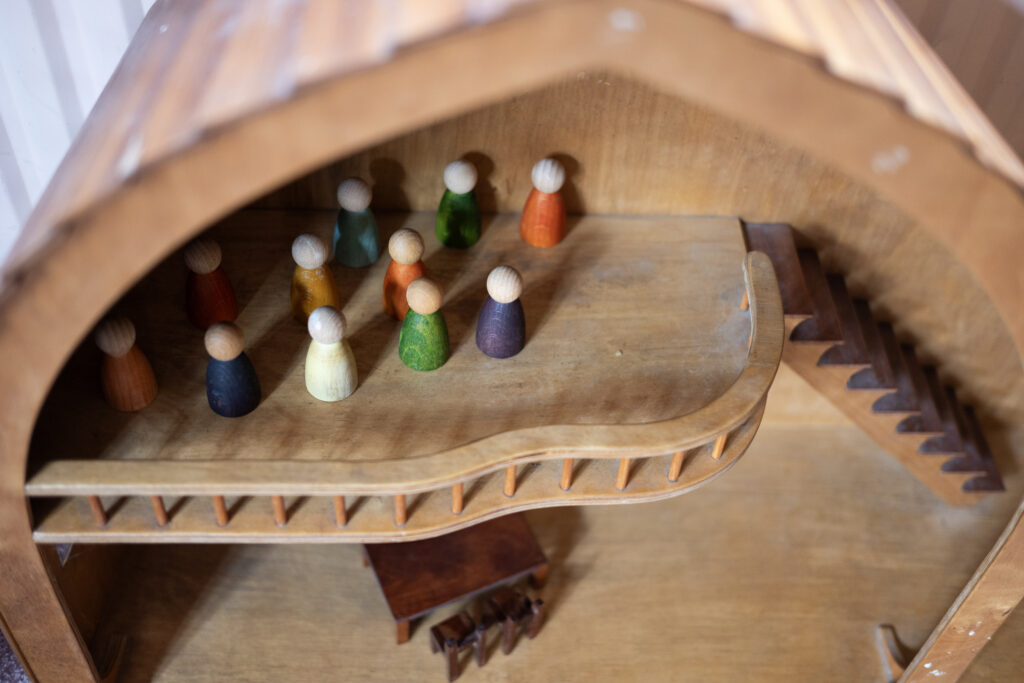
Another important aspect of Waldorf education is the recognition that young children learn through their bodies. Their understanding of the world grows through movement, touch, and physical interaction with their surroundings.
Natural materials provide a wide range of sensory experiences. Wood carries warmth and weight. Wool feels soft and comforting. Silk moves lightly through the air. Stones feel cool and smooth in the hand. These materials respond to touch in subtle and varied ways that plastic toys often cannot replicate.
Through carrying, stacking, sorting, and building, children develop coordination, balance, and hand strength. At the same time, they gain a quiet understanding of physical qualities such as weight, texture, and stability. These experiences lay important foundations for later learning, particularly in areas such as writing, problem-solving, and spatial awareness.
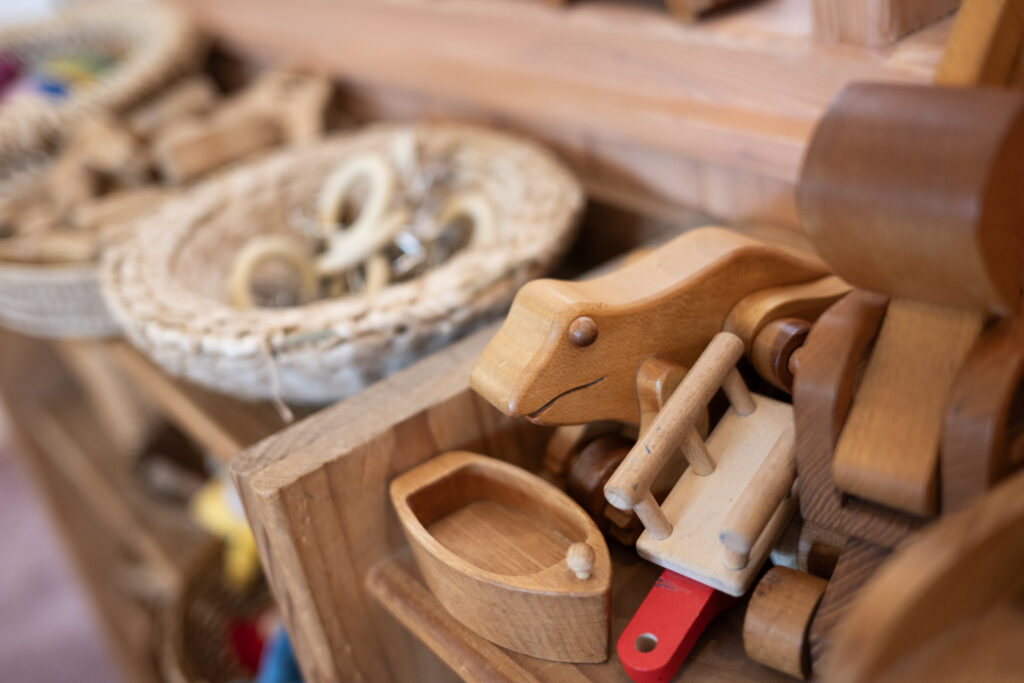
In a world filled with rapid stimulation, the ability to concentrate deeply is becoming increasingly precious. One of the gifts of simple materials is that they invite children into slower, more sustained play.
When toys do not constantly demand attention through lights or sounds, children often settle into longer periods of exploration. They may spend extended time constructing buildings, arranging scenes, or developing imaginative stories with friends.
During this kind of play, children practise problem-solving, negotiation, and cooperation. They experiment with ideas, make adjustments, and refine their creations. What might appear to an adult as “just play” is, in reality, complex and meaningful work.
This depth of engagement supports the development of patience, perseverance, and focus.

Simple materials also encourage children to become resourceful. When a toy does not arrive with a fixed purpose, children must decide how it will be used.
A few blocks and cloths might become a bakery shop one day and a pirate ship the next. Pinecones may represent animals, treasures, or food in an imaginative story. A stick found in the garden might become a fishing rod, a magic wand, or a tool for digging.
Through this process, children experience the satisfaction of creating something from their own ideas. They learn that the world around them is full of possibilities and that their imagination has the power to transform ordinary materials into something meaningful.
The choice of simple, natural materials also shapes the atmosphere of the classroom or home. Wooden toys, wool fabrics, and natural objects create spaces that feel warm, calm, and grounded. Instead of overwhelming the senses with bright colours, flashing lights, or loud sounds, the environment offers a gentle invitation to play.
This sense of calm helps children feel secure and settled. When the environment is not overstimulating, children can more easily enter into their play and build relationships with others.

Perhaps the most important reason Waldorf education values simple toys is that they honour the child’s inner activity. Young children are naturally creative, curious, and capable of generating their own ideas. When the environment leaves space for imagination, it communicates a quiet message of trust: that the child’s ideas are valuable and that their play is meaningful.
Over time, children who have experienced this kind of play often develop confidence in their own thinking and creativity. They learn to rely on their imagination rather than external entertainment.
In a world that often offers more stimulation than children truly need, simplicity can be a gift. A basket of wooden blocks, a handful of shells, or a piece of cloth may not appear remarkable at first glance. Yet in the hands of a child, these simple objects can become anything.
Through them, children build worlds, tell stories, solve problems, and explore relationships. They practise creativity, patience, cooperation, and care.
And perhaps most importantly, they discover that the richest play does not come from what a toy can do — but from what their imagination can bring to it.

