
Why We Craft, Why We Keep Rhythm, and Why Winter Matters
A deeper look into Steiner Waldorf early childhood
We were sorry not to see everyone at our Parents Enrichment Evening, so we wanted to share the heart of what we explored together. Our gathering is always meant to be more than a date in the diary: it is a chance to come together as a community around the children.
In Steiner Waldorf early childhood, we often speak about the importance of creating the conditions for healthy development rather than “teaching” in the conventional sense. This can look deceptively simple from the outside: unhurried play, singing, stories, baking, time outdoors, and handcraft. But behind this simplicity is a thoughtful picture of the young child and what they most need in the first seven years of life.
This post offers a deeper look into three strands of our work:
The Young Child: Learning Through the Body, the Senses, and Relationship
In the first six or seven years, a child is learning the most fundamental things a human being can learn — not facts, but capacities:
Waldorf education describes early childhood learning as embodied. The child does not primarily learn by analysing, comparing, or discussing. They learn by absorbing and imitating. You can see this in daily life: a toddler copies the way you sweep, repeats a phrase you didn’t realise you said, or picks up a gesture and makes it their own. It isn’t “pretend” to them — it is how they enter the world.
This is why we place such care on the quality of what surrounds the child:
We sometimes say that the adult is the child’s “curriculum” in early childhood — not through instruction, but through presence and example.
Across Spindlewood, Oak, and Maytree
While each room meets different developmental stages, the guiding principles remain consistent:
Spindlewood (0–2)
At this age, the child is still “arriving” into the world. They are forming deep foundations through:
Oak (2–3)
Here we often see the blossoming of:
Rhythm and imitation are especially supportive here — they reduce overwhelm and help the child feel safe as they explore autonomy.
Maytree (3–6)
In these years, imaginative play deepens. Children build their inner world through:
The child’s play is the outer expression of their inner development. We protect space for play not because it is “nice”, but because it is essential work.

Why We Don’t Rush the Intellect
It can sometimes be tempting — especially in a culture that values early academic achievement — to push children towards reading, worksheets, or formal learning too soon. Waldorf education takes a different view: we aim to strengthen the foundations upon which later learning depends.
Before a child can truly thrive academically, they need strong capacities for:
When these foundations are secure, later learning becomes far more joyful and robust.
Why Handcraft Belongs in Early Childhood
Handcraft is one of the most tangible ways we support these foundations — and it is why we invited parents to “have a go” during the evening.
1) Handcraft strengthens the will
In Waldorf language, the “will” is our capacity to act in the world — to begin something, carry it through, and meet challenges without giving up. In young children, will is not formed through lectures or willpower speeches. It is formed through doing.
Craft supports will because it asks for:
This is not about producing a perfect result. It is about strengthening the child’s inner sense of, “I can do something. I can try. I can persist.”
2) Handcraft supports healthy sensory development
Natural materials offer an honesty and richness that synthetic materials often don’t.
Wool, cotton, beeswax, wood — these materials are:
Sensory experiences in early childhood are not “extras”. They shape how the nervous system organises itself. Touch, movement, balance, and rhythm are deeply linked to emotional regulation and later learning.
3) Handcraft develops fine motor skill in a living way
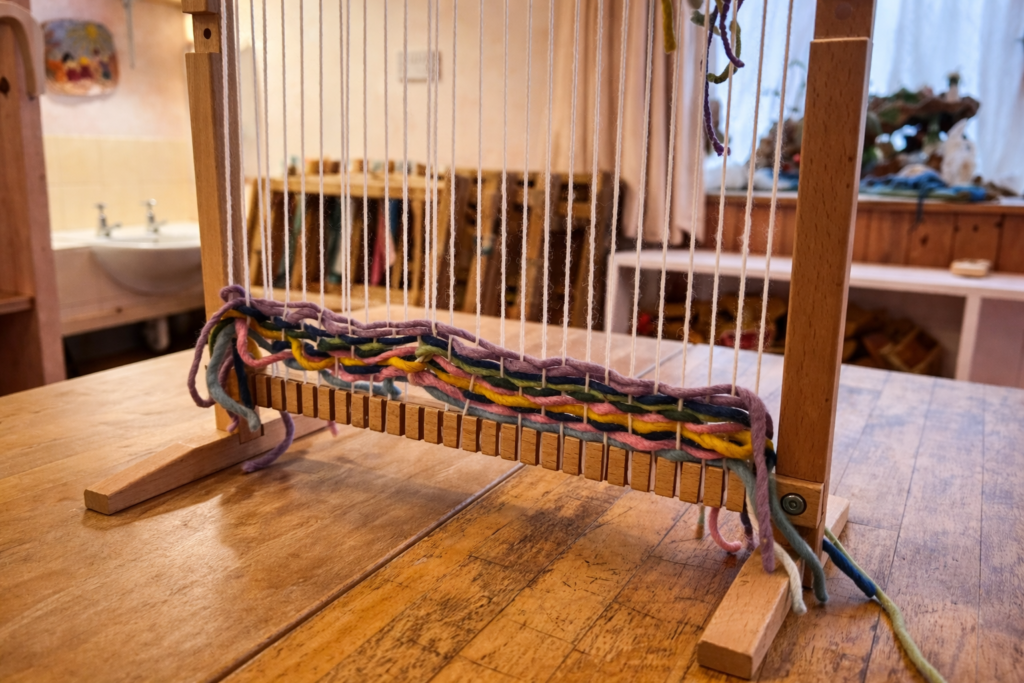
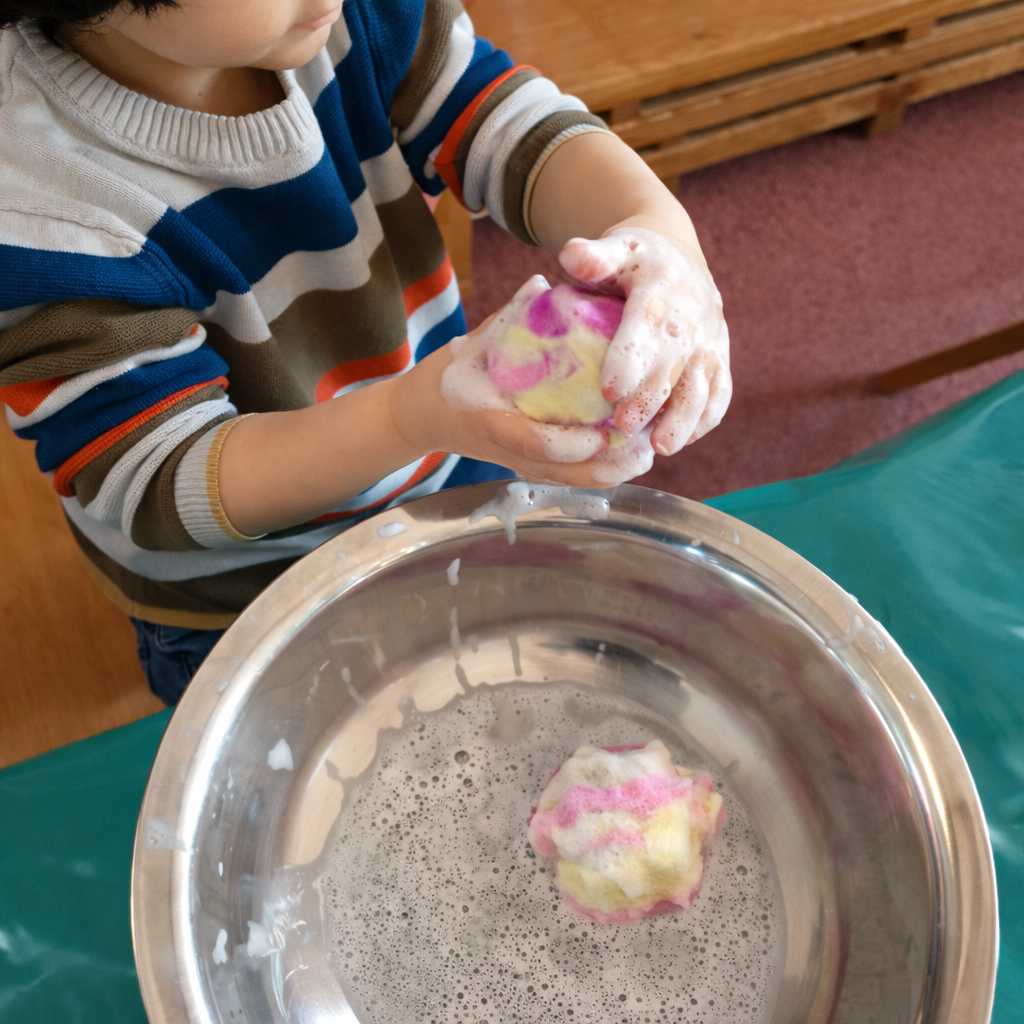
Finger knitting, sewing, felting, beeswax modelling — these quietly develop the muscles and coordination needed later for writing and practical life. But they do it in a way that is:
4) Handcraft cultivates calm attention
Many crafts naturally invite a slower tempo. This is one of their greatest gifts.
When a child sees an adult working steadily, without rushing, something in them settles. They don’t have to perform. They can simply participate.
In a world full of fast images and instant entertainment, the steady pace of handwork offers a powerful counterbalance.
5) Handcraft connects the child to the human gesture of care
There is also something deeply human in making and mending. When children experience that clothes are repaired, toys are looked after, and materials are treated respectfully, they learn:
This has moral depth — not taught as a rule, but absorbed as lived experience.
The Adult as Maker: Why Your Presence Matters
One of the simplest and most profound ideas in Waldorf early childhood is this: what the adult does matters.
Children learn not only from what we offer them, but from what they witness us doing.
When an adult bakes bread, folds cloths, sews a button, sweeps the floor, prepares a snack — the child receives a picture: the world can be tended. Life can be met with competence and care.
This is why we prioritise real work in the kindergarten and invite children into it in age-appropriate ways:
It is not about turning childhood into chores. It is about inclusion in real life.
Late Winter: The Quiet Work Beneath the Surface
As we move through the final part of the winter term, we also carry the seasonal mood into our work.
Winter is a time of:
In nature, much is happening beneath the surface. Seeds are held in darkness. Roots deepen. Life is preparing before it appears.
Young children often mirror this. Their development is not always visible on the outside — and yet enormous inner work is taking place. At this time of year we often support the children with experiences that are:
This might look like:
As spring approaches, we begin to sense the shift — longer light, subtle signs of change — and the kindergarten gradually “breathes outward” again. But we don’t rush that turning. We let it arrive.
Rhythm: The Invisible Support Holding the Day
A key word in Waldorf early childhood is rhythm.
Rhythm is not a rigid schedule. It is a breathing pattern that helps children feel safe. When the day has a reliable flow, the child doesn’t have to constantly ask, “What next?” Their energy can go into play and growth.
Rhythm supports:
This is why our days include repeating anchors: arrival, play, tidying, snack, outdoor time, story, rest — each carried in a familiar sequence. Over time, children “settle into the day” through this repeating pattern.
What This Might Mean for Home
(Simple, realistic ways to support your child — no perfection needed)
Families often ask what they can do at home that aligns with what children experience in kindergarten. The good news is that it can be very simple.
1) Protect unhurried play
Try to leave pockets of time where nothing is planned and play can deepen. Children’s play often needs time to “arrive.” If life is too hurried, play stays shallow.
2) Let children see real work
A child doesn’t need constant adult entertainment. Often, they are happiest nearby while you cook, fold laundry, or tidy. They may play around you — and that is enough.
3) Offer simple participation
Small, doable tasks build confidence:
4) Consider a gentle rhythm to the day
Especially in late winter, rhythm can reduce stress for everyone. Simple anchors like a consistent bedtime, regular mealtimes, and predictable “outside time” can make a big difference.
5) Fewer, warmer materials
You don’t need to throw everything out — but notice what your child plays with most deeply. Often, open-ended, natural materials invite richer play than toys that do everything for the child.
A Closing Word: Childhood Needs Time
One of the deepest intentions behind Waldorf early childhood is to protect something increasingly rare: time.
Time to grow without pressure. Time to play without constant interruption. Time to form the senses and the body. Time to become secure enough inside to meet the world with confidence.
Thank you for being partners in this work. We are grateful for your trust and for the community you create around the children.

Gemma says:
I really enjoyed reading this article Milly, thank you.
Susanna says:
Beautiful words, thank you Milly.